Palm Tree Seller in Dubai: The Complete Buyer's Guide
Key Takeaways
- Importing palms into the UAE legally requires an agricultural activity licence, a MOCCAE import permit, and a phytosanitary certificate — ask any seller offering 'imported' stock to show these.
- Locally hardened, nursery-acclimatized palms generally establish faster in Dubai gardens than specimens shipped straight from overseas.
- Price is driven mainly by species, clear trunk height, and crane/site access — not a flat per-tree rate, so be wary of quotes given with no site survey at all.
- A reputable seller lets you visit the nursery, inspect the actual specimen, and backs the sale with an establishment guarantee — not just a delivery receipt.
1. Why the Seller You Choose Matters More Than the Species You Pick
A mature palm is a multi-year investment before it ever reaches your garden — years of nursery growth, a carefully timed root-ball hardening period, and a delicate transplant that the tree either survives comfortably or struggles through for a season. Picking the right species is the easy part. The harder, more consequential decision is who you buy it from.
Dubai's landscaping market includes everything from established, Municipality-registered nurseries with their own growing grounds to informal resellers operating out of a phone number and a borrowed truck. Both can show up to the same villa with a palm tree. Only one of them can tell you where it was grown, how long its roots have been hardening, and what happens if it doesn't survive the move.
2. Licensed Nursery vs. Informal Reseller: What the Difference Actually Means
In the UAE, bringing plants, seeds, or palm seedlings into the country isn't informal — it runs through the Ministry of Climate Change and Environment (MOCCAE), and requires the importing establishment to hold an agricultural activity licence that specifically permits importing and exporting plants and seedlings. Each shipment needs an import permit, a phytosanitary certificate, and soil that's been treated and verified pest-free — a real, enforced process, not a formality.
That matters to you as a buyer because it's a simple, concrete way to separate an established seller from a middleman. A licensed nursery can show you its trade licence and, for imported specimens, the paperwork behind them. A seller who can't, or waves the question away, is a genuine warning sign — not necessarily because the tree is illegal, but because you have no way to verify its health history, treatment, or origin.
We supply from our own registered nursery grounds in Al Satwa and holding yards in Al Awir, which means every specimen we sell has a known growing history before it ever reaches your garden — not just a delivery date.
3. Locally-Grown & Acclimatized vs. Freshly Imported Specimens
Even a perfectly healthy palm grown in a cooler, more humid climate needs time to adjust to Dubai's heat, alkaline soil, and brackish irrigation water before it can be safely transplanted into a villa garden. We've written in more detail about how sourcing and acclimatization affects survival rates, but the short version for buyers is this: a specimen that's spent months or years hardening off in a local UAE nursery almost always establishes faster and more reliably than one planted within days of arriving in the country.
When you're comparing sellers, ask directly how long a specimen has been in their nursery, not just where it originated. 'Imported' isn't a red flag by itself — most of the UAE's plant diversity arrives this way — but 'imported and planted the same week' is worth questioning.
4. A Practical Checklist Before You Buy
Whether you're buying one specimen palm or sourcing dozens for a community project, the same checks apply:
- Can you visit the nursery and see the actual tree, not just a stock photo?
- Does the trunk show firm, undamaged bark with no soft spots or visible boring holes?
- Are the fronds a healthy uniform green, without widespread yellowing or browning tips?
- Will they show you the root ball, or confirm root-ball size and preparation in writing?
- Is crane delivery and professional planting included, or are you on your own once it arrives?
- Is there a written establishment guarantee, and what exactly does it cover?
- Can they provide trade licence details on request?
5. Questions Worth Asking Before You Pay a Deposit
A few direct questions tend to separate a serious nursery from a reseller flipping stock they don't fully understand:
- “How long has this specimen been in your nursery, and where was it grown originally?”
- “What's included in the price — just the tree, or delivery and planting too?”
- “What happens if it doesn't survive the first few months?”
- “Can I see a similar completed installation, or speak to a past client?”
- “Who handles the crane lift, and are they insured for it?”
6. What Actually Drives Palm Tree Pricing in Dubai
A trustworthy seller won't quote a serious order over the phone with no site details. Price depends on a handful of concrete factors: the species itself (a fast-growing Washingtonia costs less than a slow-maturing Bismarck Palm of similar height), the clear trunk height you need, how accessible your site is for a crane, and the quantity you're ordering. A single specimen for a tight courtyard is priced very differently from a bulk community boulevard order.
As a general starting reference, our own current nursery pricing for commonly requested varieties runs from roughly AED 180 for wood and trunk products through to several thousand AED for large specimen palms — you can see live starting prices on each variety's own page in our product catalog. Any quote that skips a site survey entirely is, at best, a rough estimate.
7. A Quick Buyer's Guide to Popular Varieties
If you're still deciding on species, here's a fast overview of what we're asked for most often in Dubai gardens:
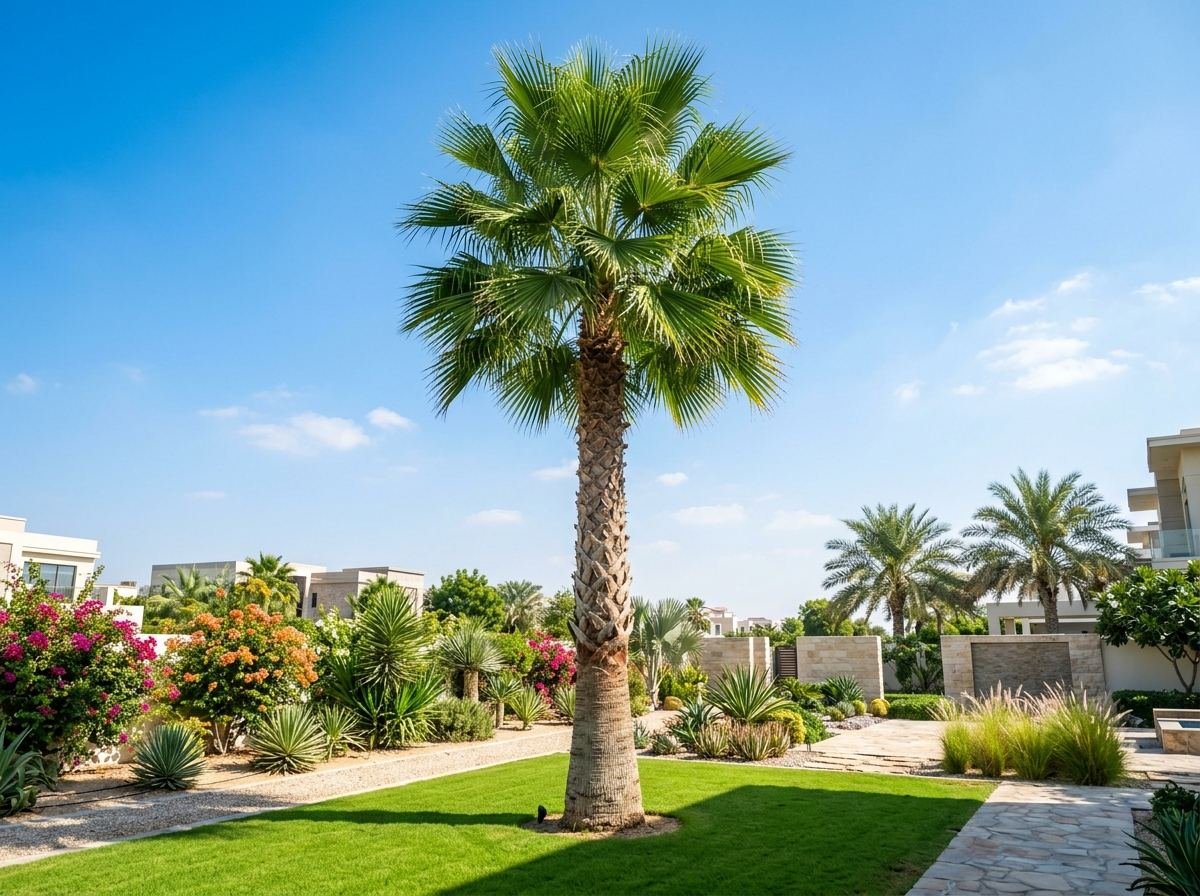
- Washingtonia Palm — the fastest-growing, most wind- and heat-tolerant choice for avenues and boundary planting.
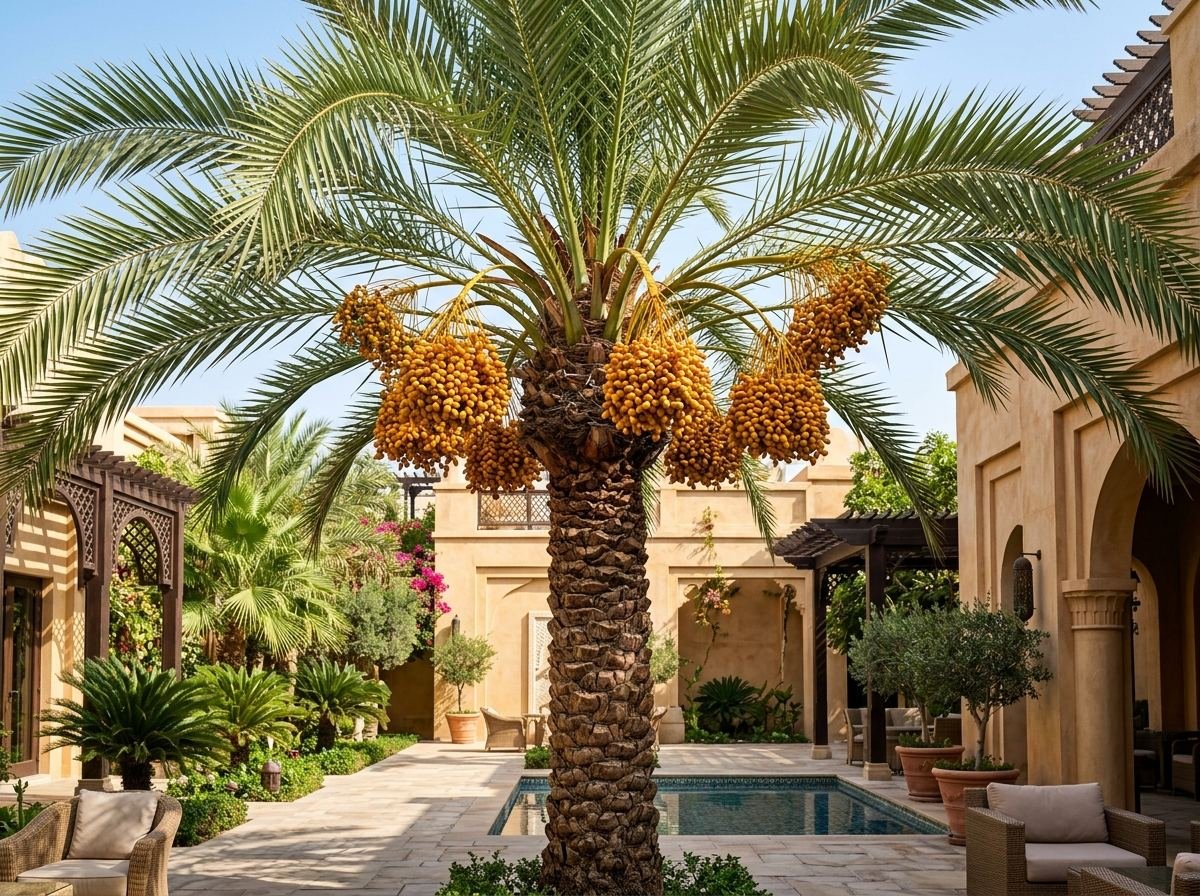
- Date Palm — the cultural, heritage choice, with a thick textured trunk and genuine fruit production.
- Bismarck Palm — a silvery-blue statement specimen for modern villa entrances and poolside focal points.
- Canary Island Date Palm — a dense, heavy-crowned palm for expansive lawns and grand entrances.
- Coconut Palm — the tropical, curved-trunk look favoured on beachfront and poolside properties.
- Areca Palm — a clustering, multi-stem screen for privacy along boundary walls and patios.
- Foxtail Palm — a clean, self-cleaning, modern silhouette for symmetrical entrances.
- Palm & Tree Wood and Trunk — seasoned, treated timber for pergolas, rustic fencing, and decorative garden features.
8. The Sale Doesn't End at Delivery
A palm's survival depends as much on what happens in its first 90 days in the ground as on where it was bought. Crane placement, soil preparation, and correctly calibrated irrigation are what actually determine whether a beautiful specimen thrives or quietly declines over its first Dubai summer. Our full palm tree services cover exactly this gap — sourcing through to a 90-day establishment guarantee — so the seller and the installer are accountable to the same outcome, not two separate parties pointing at each other if something goes wrong.
9. Red Flags Worth Walking Away From
A few patterns are worth taking seriously if you encounter them:
- A quote given with zero questions about your site, access, or soil conditions.
- No fixed nursery address you can visit in person.
- Reluctance to put a health or establishment guarantee in writing.
- Pressure to pay the full amount upfront before any site survey.
- No clarity on who actually performs the crane lift and planting.
Ready to Get Started?
Get a free quote from Dubai's trusted palm tree specialists.